





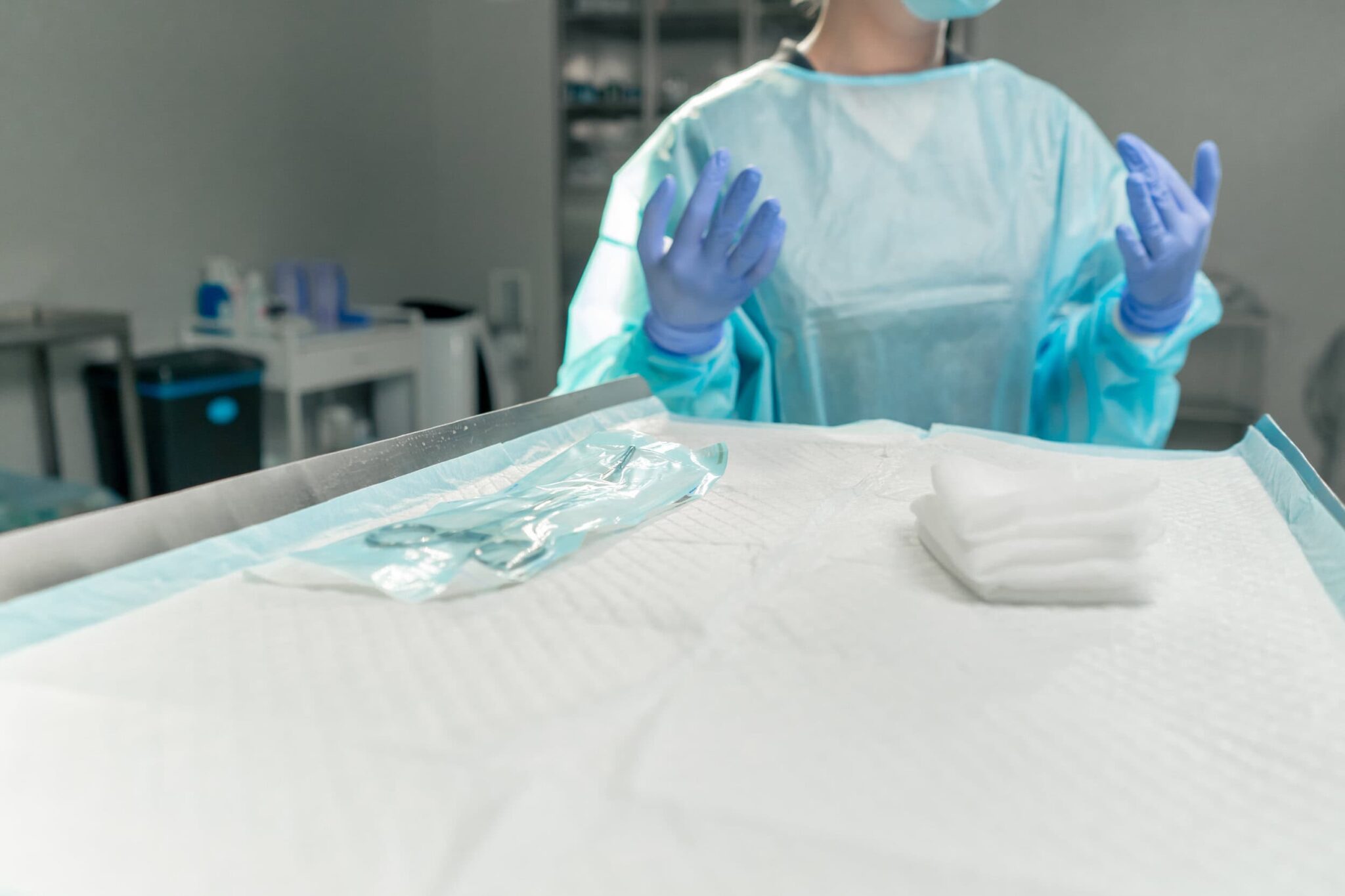
People tend to focus on the surgeon’s hands, the instruments, and the technology. But the protective environment around a procedure depends on a lot more than that. Airflow is controlled, surfaces are monitored, every instrument is sterilized and tracked. Surgical textiles, gowns, drapes, specialty linens, are part of that same system and deserve the same level of attention.
When a surgical linen service is doing its job properly, nobody in the OR has to think about it. The right textiles show up processed to clinical standards, ready to perform. When it isn’t, the gap shows up somewhere it shouldn’t.
Unitex Healthcare Laundry Services works with surgical facilities across the Northeast to make sure that never happens.
1. Barrier Performance Begins with Fabric Design
Surgical gowns and drapes are engineered to create a barrier between sterile and non-sterile fields. Fabric weight, weave density, and reinforced zones are selected for fluid resistance and durability under surgical conditions.
High-quality textiles maintain their integrity across repeated processing cycles. Reinforcement panels remain secure. Fabric strength holds. Sizing stays consistent. These details matter in an environment where exposure risks must be carefully controlled.
Barrier performance is not just about appearance. It depends on both textile construction and the way those textiles are maintained over time.
2. Processing Standards That Support Infection Control
Even the most advanced surgical textile depends on disciplined processing. Wash parameters must be documented, repeatable, and validated.
Unitex Healthcare Laundry Services processes surgical textiles under TRSA Hygienically Clean certification standards. That certification requires microbiological testing, third-party verification, and documented controls over temperature and chemistry. These systems are designed for consistency.
When wash cycles are validated and monitored, results are predictable. There is no variability from one load to the next. In surgical environments, predictability supports infection control.
3. Handling and Separation Within Healthcare-Only Facilities
Surgical linens require controlled handling from the moment they leave a healthcare facility until they return ready for use. Workflow design matters.
Unitex Healthcare Laundry Services operates healthcare-only processing facilities across the Northeast. There is no hospitality crossover and no mixed commercial accounts. Clinical textiles move through structured environments designed specifically for medical processing.
Segregated workflows, automated systems, and disciplined packaging procedures help maintain control at each stage. These operational safeguards support the integrity of surgical textiles before they reenter the operating room.
4. Durability Without Compromising Clinical Standards
Reusable surgical linens are built for repeated cycles. Over time, durability becomes a defining factor in maintaining safety standards.
High-quality surgical gowns and drapes are inspected, monitored, and circulated through structured programs. Items that no longer meet performance standards are removed from circulation. This disciplined approach supports both infection control and responsible textile management.
Reusable systems also reduce unnecessary waste when properly managed. Sustainability in surgical textiles does not replace hygiene requirements. It operates within them.
5. Consistency Across Multi-Facility Health Systems
Many hospital networks and ambulatory surgery centers operate across multiple states. Surgical linen programs must support uniform performance across locations.
Unitex Healthcare Laundry Services provides regional infrastructure throughout New Jersey, New York, Connecticut, Massachusetts, and Maine. Facilities operate 24 hours a day to support steady supply. Backup capacity across multiple plants allows continuity when needed.
When textile specifications and processing standards remain consistent across facilities, surgical teams work within familiar systems. That stability contributes to a controlled operating room environment.
6. Long-Term Infrastructure Supports Surgical Programs
Surgical linen service is not a temporary arrangement. It depends on sustained investment in equipment, facilities, and disciplined systems.
Unitex Healthcare Laundry Services has been family-owned for over 100 years, with four generations involved in the business. That continuity supports ongoing modernization of healthcare-only processing plants, automated equipment, and regional logistics networks.
Infrastructure development is not seasonal. It is part of long-term operational planning.
Surgical Linen Service Backed by Unitex Healthcare Laundry Services
Operating room environments depend on systems that perform consistently. Surgical gowns and drapes are part of that infrastructure. Their effectiveness relies on fabric integrity, controlled processing, disciplined handling, and reliable circulation.
Unitex Healthcare Laundry Services supports hospitals and ambulatory surgery centers across the Northeast with healthcare-only facilities and TRSA Hygienically Clean certified processing.
For surgical linen service built on structure and long-term stability, Contact Unitex Healthcare Laundry Services.